About
Twenty years turning strategy into execution across GTM, operations, technology, and transformation.
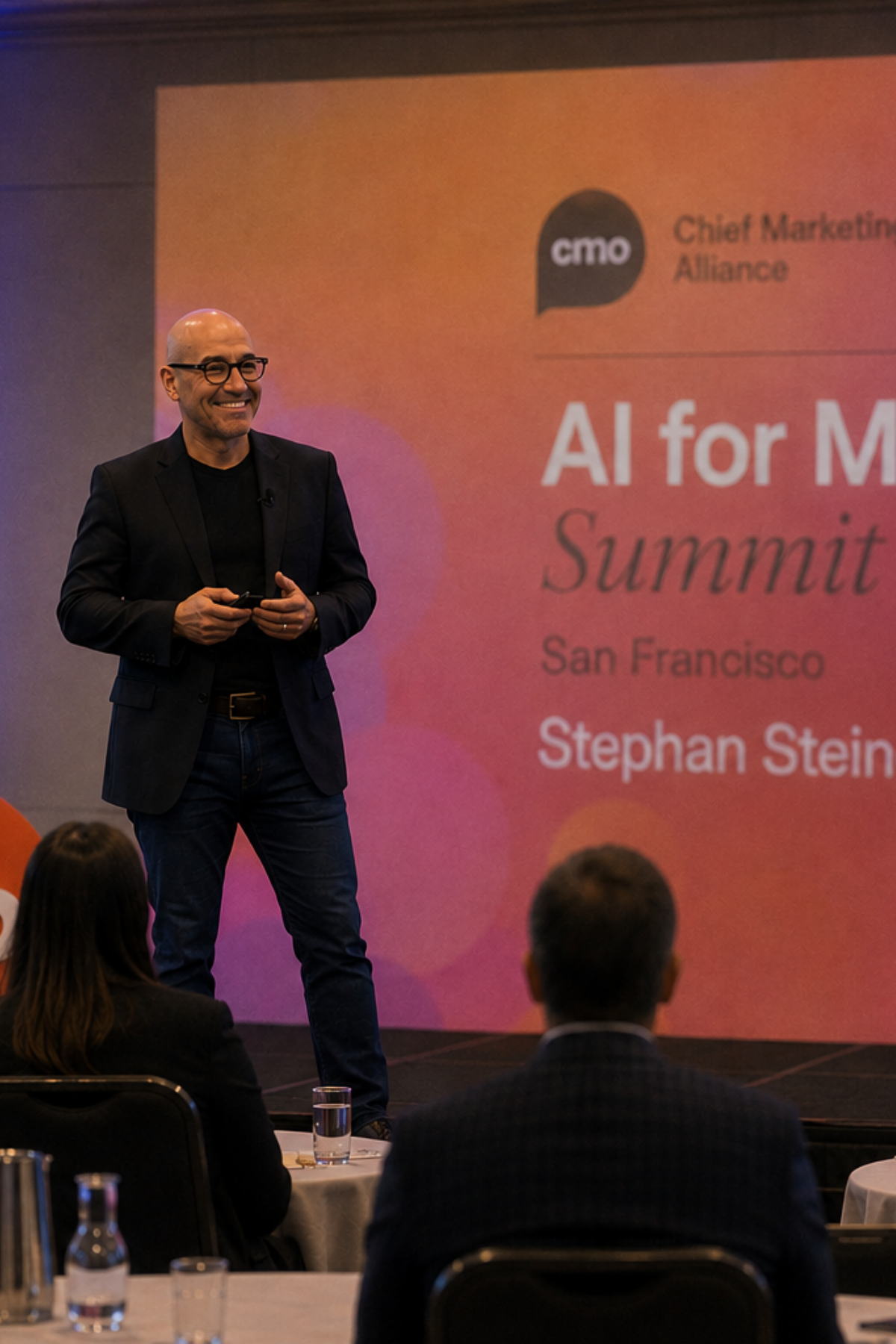
The problem is rarely the strategy.
Most organizations know where they want to go. The harder part is building the organizational capabilities required to get there: translating priorities into decisions, aligning people, processes, data, and technology around the work, and creating enough clarity and accountability for teams to execute.
That intersection between strategy and execution has defined my career.
For more than twenty years, I’ve worked across Business, Marketing, Sales, and Technology Operations. My experience spans hands-on work in MarTech and cloud CRM through global leadership of operating models, enterprise platforms, transformation, and AI at SAP, BusinessObjects, and Symantec.
Along the way, I’ve learned that transformation rarely succeeds because of one technology, one organizational change, or one great strategy. It succeeds when organizations build the capabilities required to execute: when people understand what needs to change, leaders create clarity around priorities, and operating models, technology, and ways of working reinforce the outcomes they are trying to achieve.
I started my career on the business side, not in technology.
I grew up in Switzerland. The German accent still tends to give that away. I began in finance and audits, developed leadership as a military officer, and led business operations for Switzerland’s largest department store chain.
Those experiences shape how I still approach transformation today: understand the business problem first, put the customer at the center, then determine what needs to change to solve it.
As technology became increasingly central to how businesses operate, I moved deeper into the intersection between business and technology. I worked hands-on with MarTech and cloud CRM, helping translate business requirements into platforms, processes, and new ways of working.
At Symantec and BusinessObjects, that expanded into global operations, customer lifecycle and renewal models, and enterprise platforms. I learned to look beyond technology implementation to the operating system around it: who owns the work, how decisions get made, how teams collaborate, and whether the investment actually improves business performance.
That perspective has stayed with me throughout my career.
At SAP, my responsibilities grew from Marketing Operations and enterprise platforms into broader Technology and Sales Operations leadership, including MarTech, transformation, and AI.
I built and led global organizations supporting thousands of Marketing, Sales, and partner users while working across both business and CIO environments. That gave me a perspective I continue to value: business and technology leaders often see different parts of the same problem. Transformation works best when those perspectives come together around shared outcomes.
My work also coincided with fundamental changes in SAP’s business and operating environment. I helped support the shift from perpetual software licensing to cloud and consumption-based models while modernizing the platforms and operating models behind GTM execution.
Across more than eleven acquisitions, I helped integrate organizations, processes, and technology while protecting business continuity. More recently, data, intelligence, automation, and AI became increasingly important to how we improved execution and how work got done.
Operating at that scale reinforced something I learned much earlier in my career:
Leaders need enough operating depth to understand the problem, ask the right questions, and remove obstacles. At the same time, capable teams need clarity, autonomy, and support to make decisions and deliver results.
I’ve worked through several generations of technology change, from early MarTech and cloud CRM to enterprise platforms, customer intelligence, automation, and now AI.
Each generation creates new possibilities. It also creates a familiar temptation: assume that implementing the technology will create the transformation.
It rarely does.
Technology creates value when it strengthens what the organization is able to do. That requires capable people, clear ownership, trusted data, integrated platforms, effective governance, and workflows that make execution easier rather than adding complexity.
AI raises the stakes further. Organizations can automate and scale work faster than ever. But they can also automate fragmented processes, unclear decisions, poor data, and organizational complexity.
That is why I increasingly think about transformation through the lens of organizational capability: what an organization needs to be able to do well, how strong those capabilities are today, and whether they are sufficient to deliver the outcomes its strategy requires.
I’ve had the opportunity to build and lead teams across North America, EMEA, APJ, and Latin America, working with people from very different cultures, disciplines, and perspectives.
I’ve learned that high-performing organizations aren’t created through hierarchy alone. People perform at their best when they understand what matters, have clarity about their role, and are trusted to make decisions. They also need to know their leaders will support them when obstacles arise.
My role as a leader is to create that environment while maintaining high expectations for execution and results.
I like difficult problems. I ask questions. I stay close enough to understand what is actually happening. I bring business and technology perspectives together. And once the direction is clear, I want capable people to have the autonomy to execute.
Transformation ultimately happens through people. Technology can enable it and operating models can structure it, but people determine whether a new way of working becomes how the organization actually operates.
I currently advise select organizations through Logical Approach, helping shape consulting strategy, market positioning, operating models, AI adoption, and enterprise transformation.
I’m also leading development of Capability360, an AI-enabled Capability Intelligence platform applying the GTMbyDesign methodology to help organizations understand the capabilities required to execute their strategy, identify where those capabilities are strong or weak, and focus transformation and investment where strengthening them can create the greatest business impact.
The work builds on a question that has followed me throughout my career:
What does an organization need to be able to do well to turn strategy into results?
I’m based in the San Francisco Bay Area and currently exploring full-time executive leadership opportunities focused on transforming how organizations go to market to accelerate growth, strengthen organizational capabilities, improve operational performance, and integrate technology and AI investments to deliver measurable business value.
I’m particularly interested in organizations navigating meaningful change, where growth ambitions, emerging technology, or evolving business models require stronger organizational capabilities and tighter connections between strategy and execution.
Let’s Connect
If you’re looking for an executive who can bridge strategy and execution, business and technology, and enterprise scale with operating depth, I’d welcome the conversation.